1975
The year is 1975, Skyhooks are at the top of the charts and Peter Weir directs the mysterious Picnic at Hanging Rock. The resurgence of the Australian film and television industry is underway, supported by successive national governments that believed in the importance of telling our own uniquely Australian stories. The film industry is entering a renaissance and it’s the year colour television officially launched in Australia.
Lemac officially began on 8th September 1975, but the Lemac story really began way earlier with the passion and talent of one man – the late John Bowring ACS.
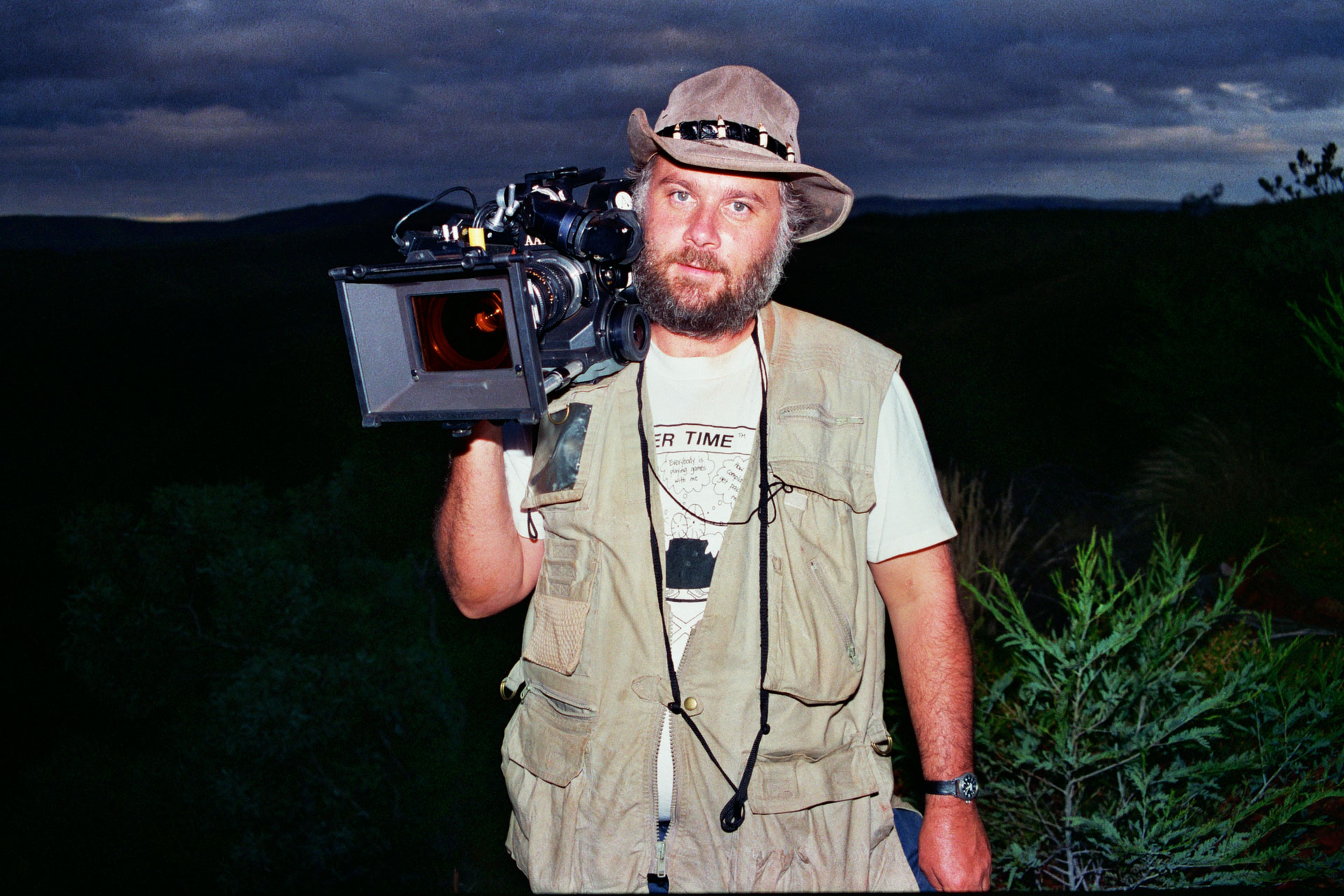
John Bowring ACS
JB the founder, the backward camel and the first rental item
At the age of 12, John Bowring had decided that he wanted to be a cameraman for Cinesound Newsreel. He was in love with film from a very early age. In Year 10 he was the driving force behind the production Retrogression for his school Kingswood College. While still at school John also attached himself to some of the top news cameramen of the time, including the late Barry Woodhouse ACS. They mentored and encouraged the young and very passionate JB.
John and Sue at Mt Cook for ‘The Mike Walsh Show”– Sue on the tools with the Nagra
It was also during his school years that the Lemac name was born. John and some other enthusiastic friends produced a series of short films. It was the very early 70’s and some were keen on the very cool at the time Camel brand. Now John was never a smoker, but it turns out there were a few Camel smokers in that gang, and the productions became ‘Lemac’ ones.
Through his persistence and the support of the news cameramen, John achieved his dream of joining the industry. He never got to work for
Cinesound, however he did project their last newsreel. GTV9 offered John a start as a film editor and it wasn’t long before an opening came up as a cameraman.
The first rental item was a portable light. Having asked GTV9 for one and with no capital budget to supply it, their Chief Accountant said that they would rent it if he bought one and advised him to go set up a business so they could pay him.
On September 8th John used his half hour lunch break to register a business name. He had tried to come prepared, bringing with him a shortlist of industry specific names, however it turned out all of them were already taken. Running out of time he registered ‘Lemac’ believing he would come back and change it later. The rest is history.
Lemac Melbourne
John’s career continued to build and in the late 70’s he left GTV9 and went
freelance, joining Michael Willesee’s new current affairs show – Willesee at Seven.
During this time John’s love of the latest gear was driving the Lemac inventory forward. At the time Lemac was operating out of home in Craigmore Street, East Malvern. There are many stories of crew arranging to collect and drop off lenses and other equipment in the outhouse in the back yard when nobody was home.
As the business grew Lemac needed a more official home and premises were rented in Church Street, Richmond in the late 70’s.
The 80’s saw strong growth within the Australian Film industry and as it flourished Lemac grew with it. In 1982 the business moved to Highett Street, Richmond, expanding the building footprint again in 1985 on the back of an investment in Crocodile Dundee.
This is where Lemac Melbourne remains to this day.
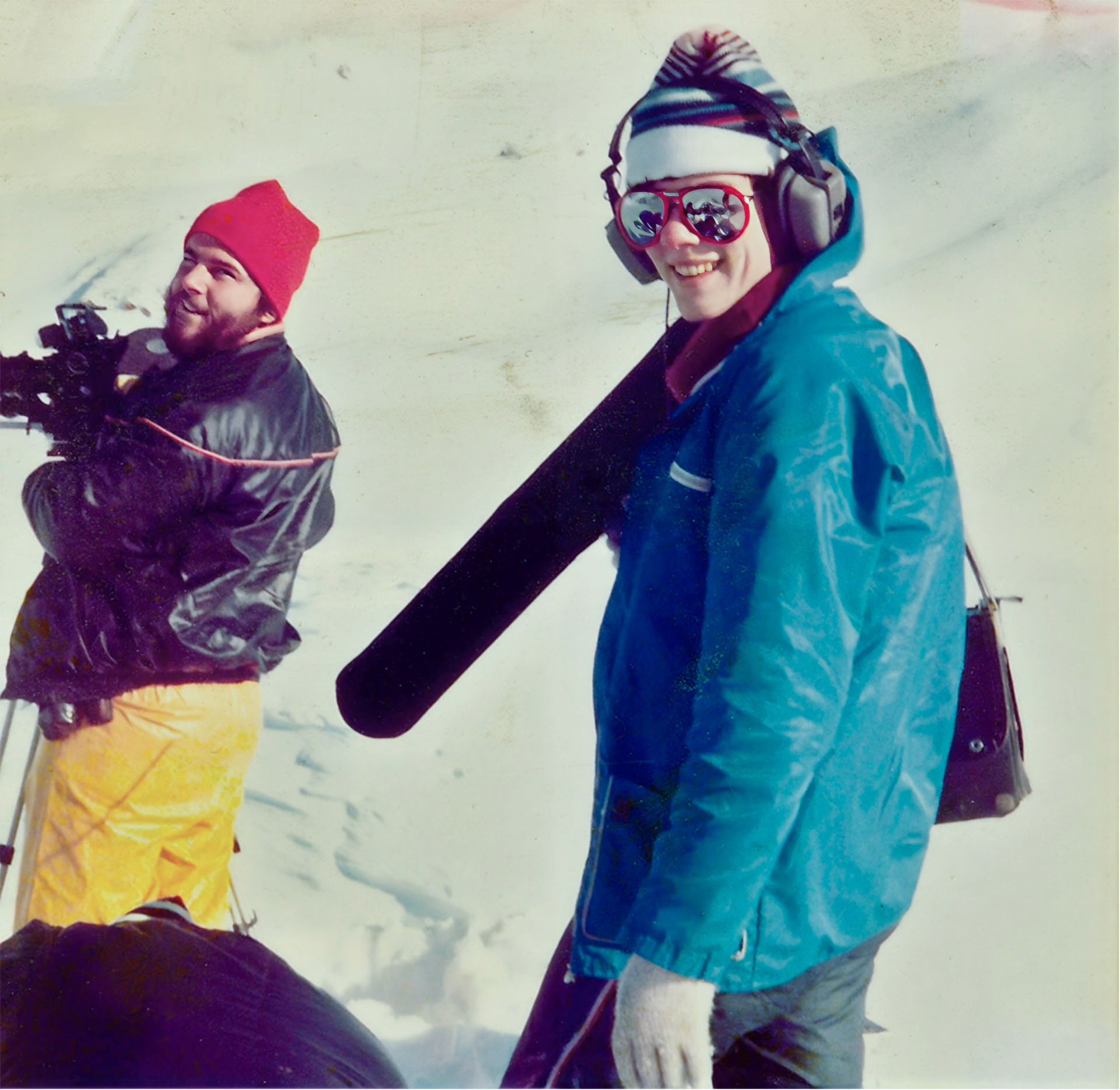
John and Sue at Mt Cook for ‘The Mike Walsh Show”– Sue on the tools with the Nagra
Sue - Partner in Lemac and life
Whilst John was working at GTV9 Sue was pursuing her education and completed a Bachelor of Economics
Degree at Monash University and went on to complete a Diploma of Education. Sue had been part of the early ‘Lemac’ gang and had been making films with John during her time with the Victorian Education Department.
The business continued to grow and Sue took a year’s leave to see if she could help John with the business. So 1982 was a big year; Sue Greenshields officially joined Lemac and they married to cement the deal. The Economics degree came in handy as well as the early filmmaking together. They never looked back.
A great partnership was born.
In the early days Lemac also provided freelance crews and handling the production side of the business became part of Sue’s skill set.
Many days and nights were spent filming and editing film segments for television shows such as Peter Russell-Clarkes Come and Get It, the Ossie Ostrich Home Video Show and the film segments for The Paul Hogan Show.
The relationship with Nine continued and John was sought after by the Network Promos teams and for special projects. With Ray Martin he filmed the interview with the great Sir Donald Bradman on 35mm also in 1996.
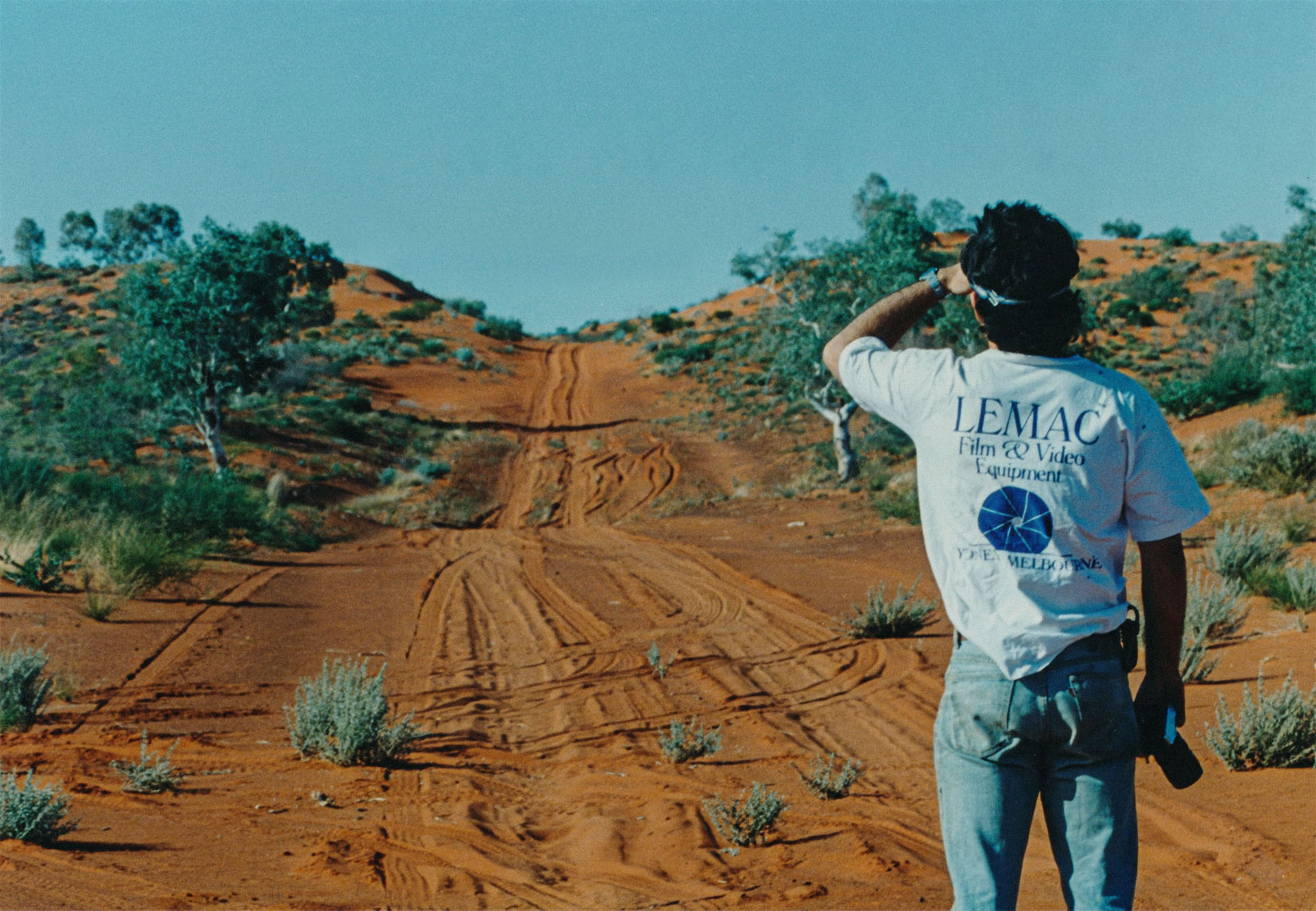
Roger Van Wensveen on location for Lemac Australian Outback
Other notable documentaries included Clive James’ Postcards From Around The World, with the one in 1996 focusing on the Melbourne Cup where Lemac provided multiple crews for the coverage.
There were also documentaries, many in the Australian Outback, such as Glenn Ridge’s Q Media Productions Australia’s Lake Eyre in 2001.
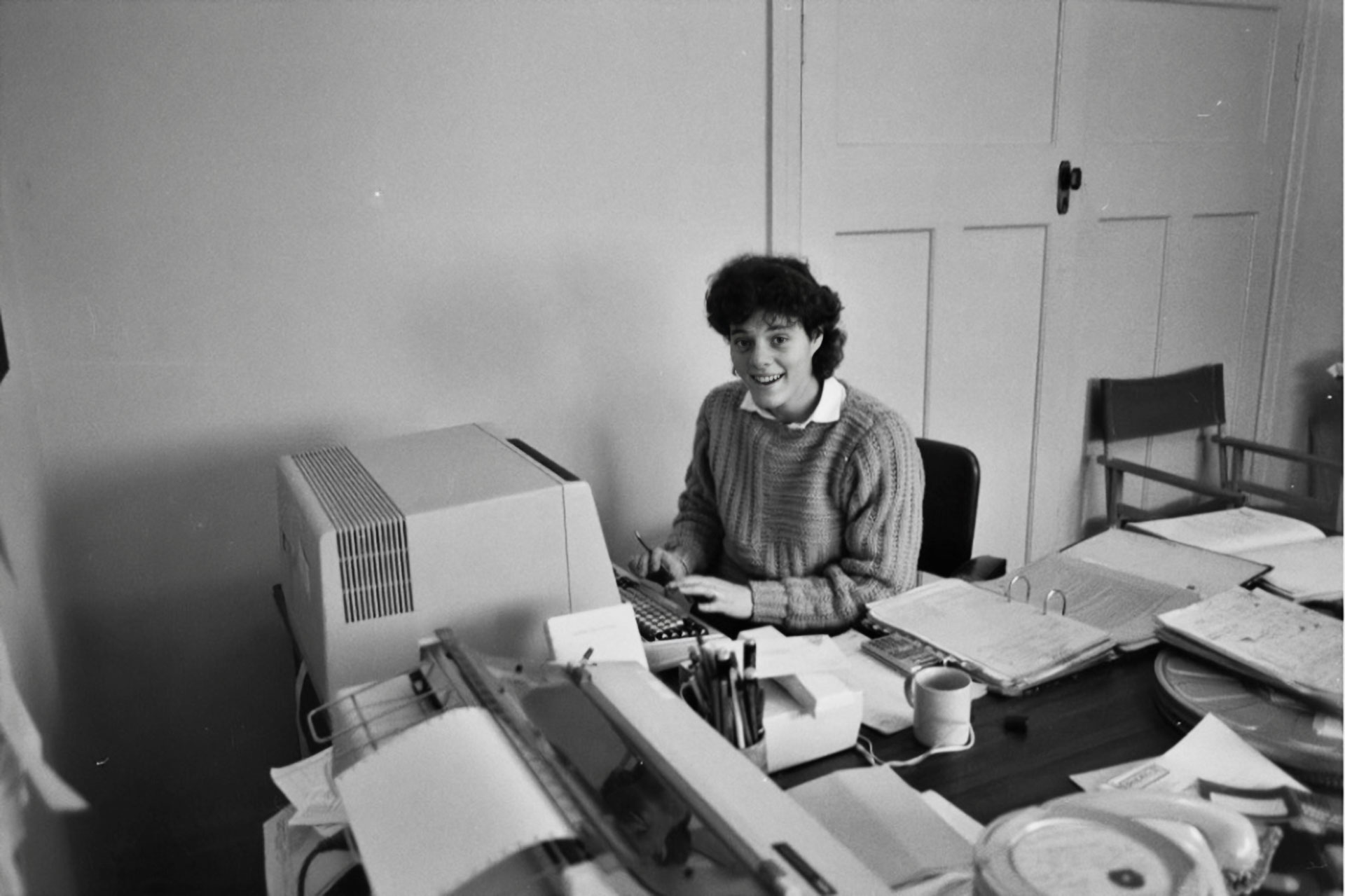
Sue getting into the backend of the business
East Coast Expansion
By the early 80’s the sales arm of Lemac was growing as a natural extension of the business. Lemac became the Australian agent for AATON, with many more agencies to follow. Strong relationships still exist today with many of those early suppliers who in turn became friends. A talented cinematographer, with a passion for the latest camera technology and the newest production techniques, was at the heart of the business, but now working with the assistance of an expanding, talented Lemac team.
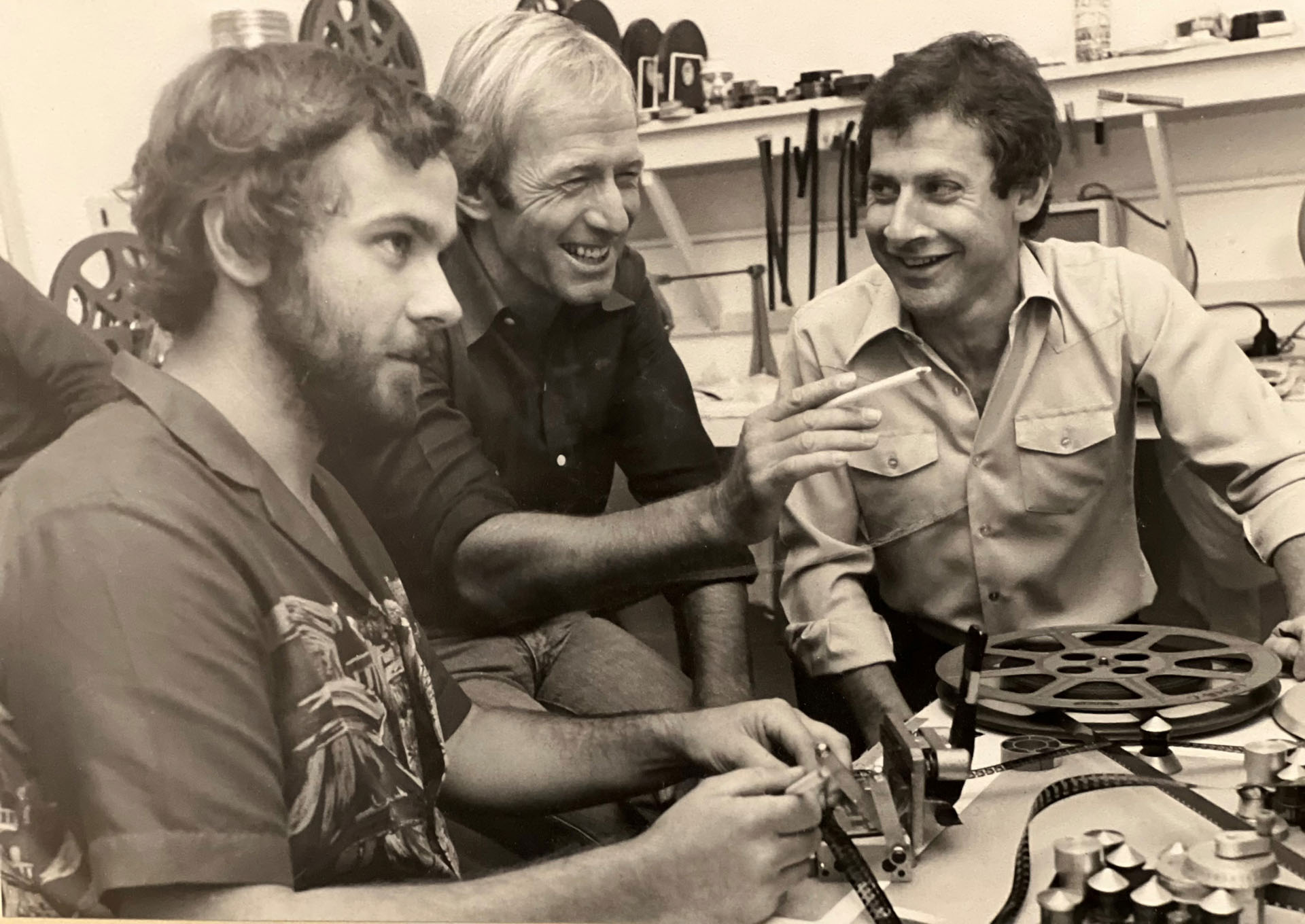
JB with Paul Hogan and director Peter Faiman on ‘The Paul Hogan Show’
Having built relationships in Sydney, the requests were coming for a permanent office to be opened. In 1987 an office in Gladesville was leased and Lemac’s first Sydney team member joined, a young Graham Jones, who is still a member
of the Lemac Sydney crew today. The addition of Graham was the start of the service department offering. In 1994 the move to Punch Street in Artarmon was made, which is where Lemac Sydney still remains.
In 2000 the Brisbane office was opened next, taking up residency on Exhibition Street in Bowen Hills. In 2012 the office
expanded back onto Brookes Street adding a dedicated Sales showroom and doubling its size. The decision to expand to Queensland has proved a good one.
The tech of cinematography - Early days
Throughout the decades, Lemac has been at the forefront of technology with John the early driving force.
John’s technical achievements included the introduction of the stretch frame shooting technique, film negative and interpositive transfers to tape, the introduction of Super16 in the 90’s, 16x9 origination for TV, AATONCode timecode on film, special ‘eyeline’ devices specifically for filming children (think modern day Eye Direct), as well as the specialised Multicam film pedestal systems which were built for and used on Murder Call.
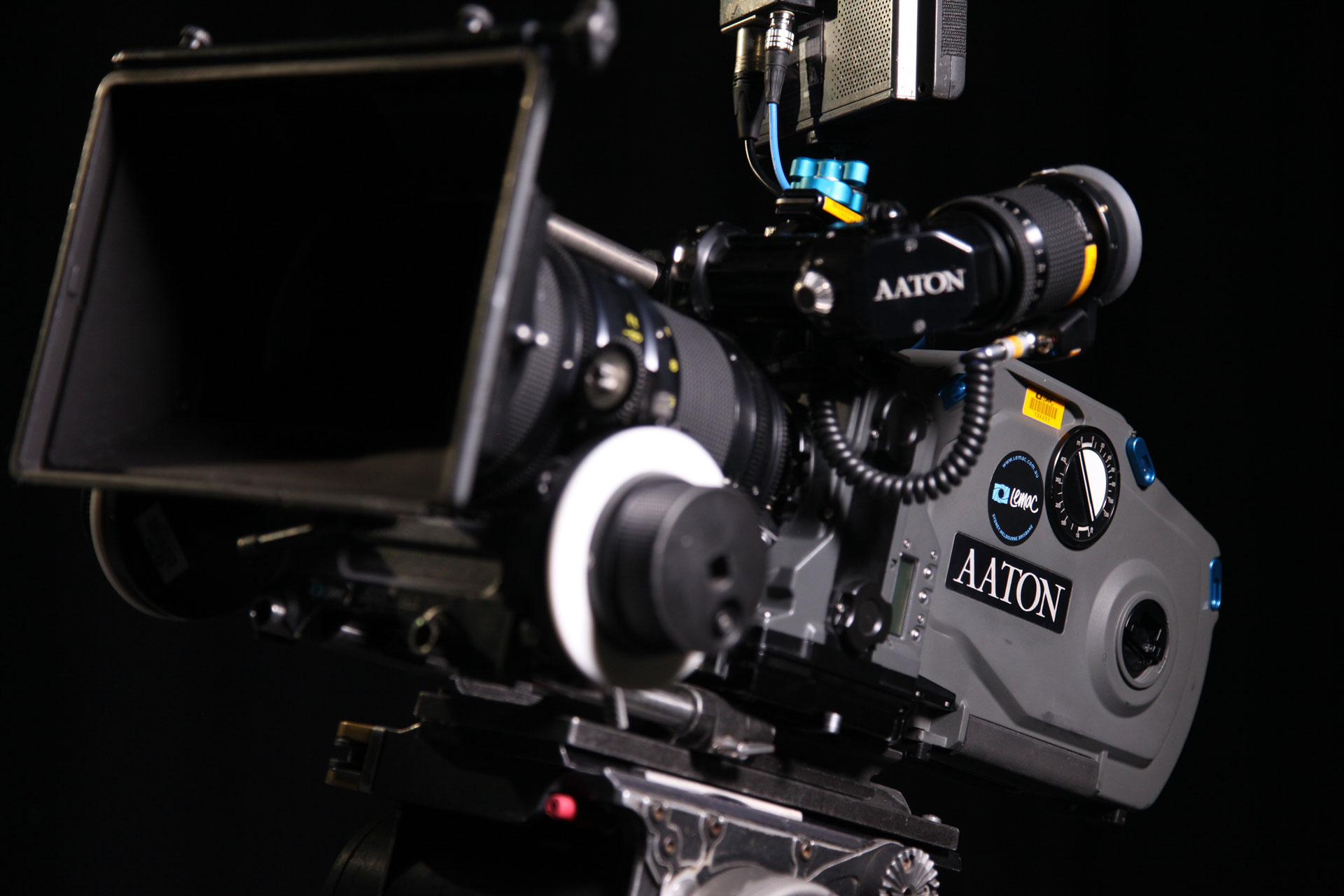
AATON Penelope 35mm 2 perf / 3 perf camera in 2008 – the world’s last film camera
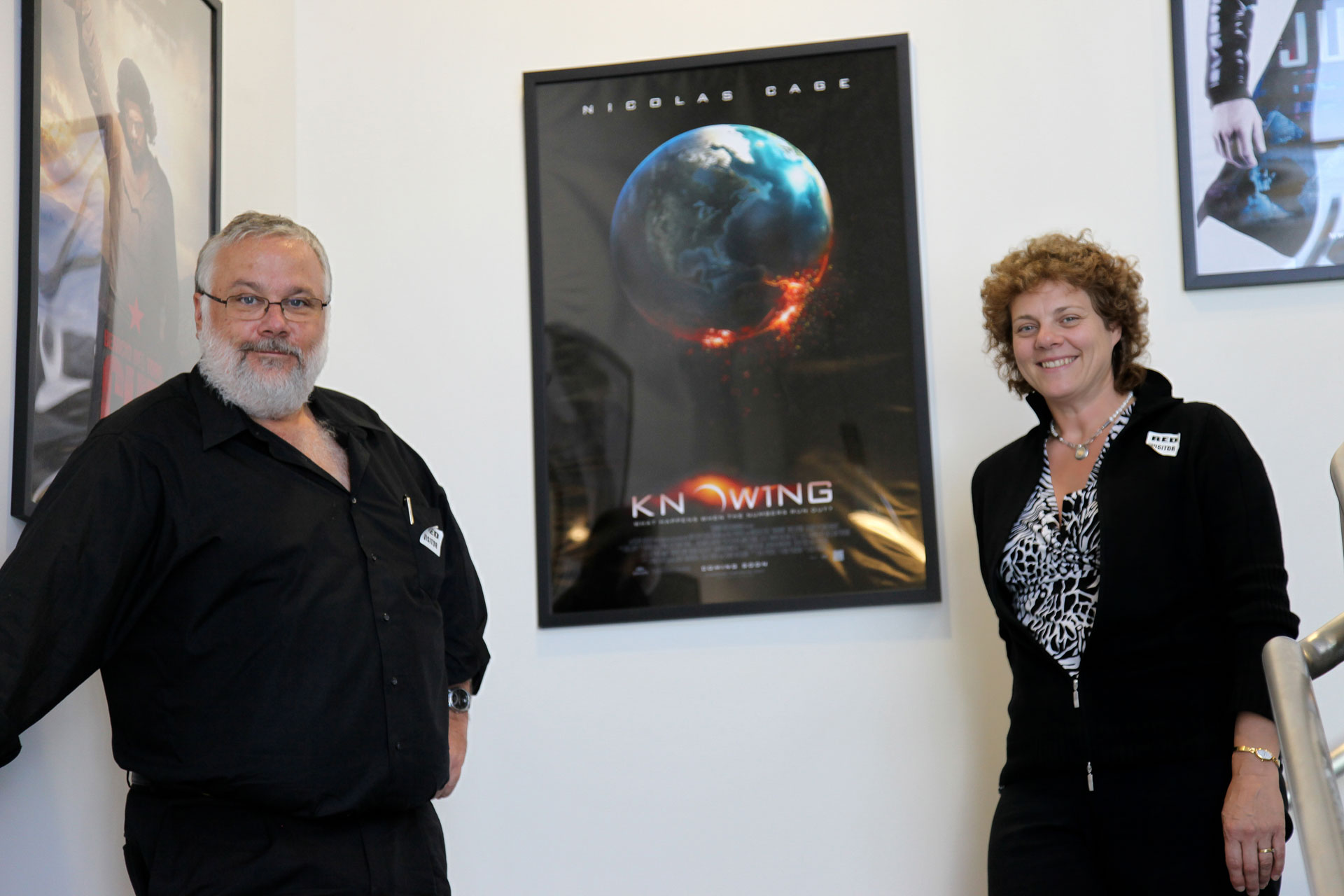
JB and Sue at RED Headquarters in Orange County USA in 2010
In 1999 John was approached by the Federation of Australian Commercial Television Stations to film and post produce their HD Presentation to the Federal Government, which lead to the introduction of HDTV into Australia.
2000 saw Lemac become the first Australian rental house to offer HD equipment, training a generation of camera crew on the format.
The same happened with 4K when Lemac brought RED to Australia. Despite being a film man at heart John saw the change to digital coming. Although the early cameras were no match for film at that time, the writing was on the wall as the technology continued to improve. When the deposit was put down at NAB for the first RED cameras (serial numbers #64 & #65) he said that “if they actual deliver them it will change the industry for ever”.
Early Australian films shot on the RED ONE were Knowing (Simon Duggan ACS ASC) and Storage (Tony Luu ACS). Recognising that the industry was changing, there was a commitment to staying at the forefront of this new digital revolution. The ARRI Alexa brought digital capture to the mainstream and while Lemac had many Reds and Alexas, the Sony F65 with its 8K sensor and mechanical shutter was equally embraced with great success on multiple series of A Place to Call Home (John Stokes ACS & Henry Pierce ACS) while others were still shooting in HD.
The tech of cinematography - Now
In the last 10 years or so a lot has changed. We’ve gone larger and now larger again in terms of sensor size. When Full Frame images started to appear, Lemac were asked to test the Sony Venice as a prototype camera resulting in the first series in Australia to shoot full frame with both the Venice and the Zeiss Supreme Primes being used on Bad Mothers (John Stokes ACS) in 2018.
Since then, the expansion of the fleet has been exponential. The advent of wireless video from the likes of Teradek and remote focus with the ARRI WCU-4 / Hi-5, the Preston HU4 & MDR-5, the Light Ranger 2 and the Cine RT Focus Bug have completely changed the game. AC’s no longer stand by the camera but can be anywhere and everywhere. Lemac were the first to bring the HU4, MDR-5, Light Ranger 2 and the Focus Bug to Australia for both sale and rental with international relationships continuing to expand.
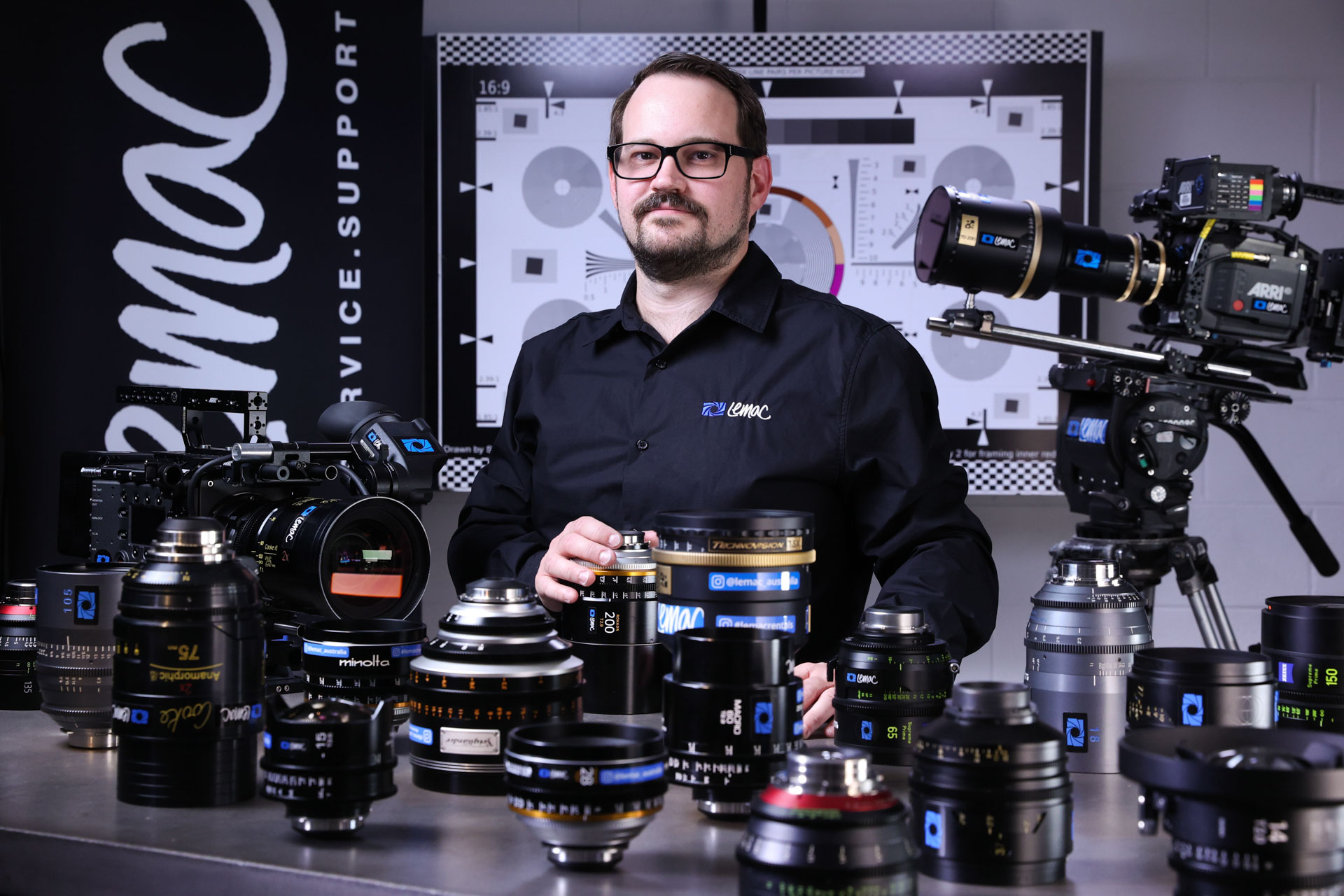
National Rentals Manager, Tim Jordin showing off the range of glass Lemac has within the fleet
What’s old is new again, with the fact that modern cameras are all of a very high standard, the lenses have become the new film stock – a way for the DP to impart a look onto a project. Lemac have made a huge investment in both time and resource to bring rare and unique lenses to Australia. This has resulted in Lemac offering the world’s largest set of rehoused Zeiss CONTAX Primes, the first Tribe7 Blackwing7’s to Australia, the first Cooke 2x Anamorphic’s to Australia, the only sets of vintage Minolta Rokkors in Australia, the only set of Tokina Vista ONE’s in Australia, the only P+S Technik Full Frame 1.5x Anamorphic Primes and zooms in Australia, and being the only rental company to offer all flavours of full frame Cooke 1.8x Anamorphic Primes in Australia.
The sensor sizes continue to grow too. Lemac are now supplying the first Australian 65mm drama series with the new Blackmagic URSA 17K 65 being paired with the Tribe7 Blackwing7’s on Treasure & Dirt (DP Ed Goldner ACS) which has been shooting in regional SA and Adelaide.
This explosion in technology, whether in regard to the cameras, the lenses you can pair with them or the accessories, all means that there’s more to know than ever when it comes to supplying and supporting crews on set.
The technology is more diverse, more powerful and more accessible than ever but it’s never just about the technology. Lemac is about the people.
The ACS and Lemac over the years
At 35, John was awarded his ACS Letters on the 14th of November 1990 becoming Accredited Member No 196, presented with Life Membership on the 30th of October 1999 and was inducted into the ACS Hall of Fame in 2005.
Lemac’s Corporate Membership Certificate was issued in 1988. Lemac has been a committed sponsor of the ACS ever since. Lemac team members have since been key contributors following in John’s footsteps. In recent years Tim Jordin Lemac’s National Rentals Manager held the position of Vice President of the Qld ACS Committee and was a national delegate from the start of 2012 through to 2021. Many technical nights have been supported by Lemac for ACS members Australia wide.
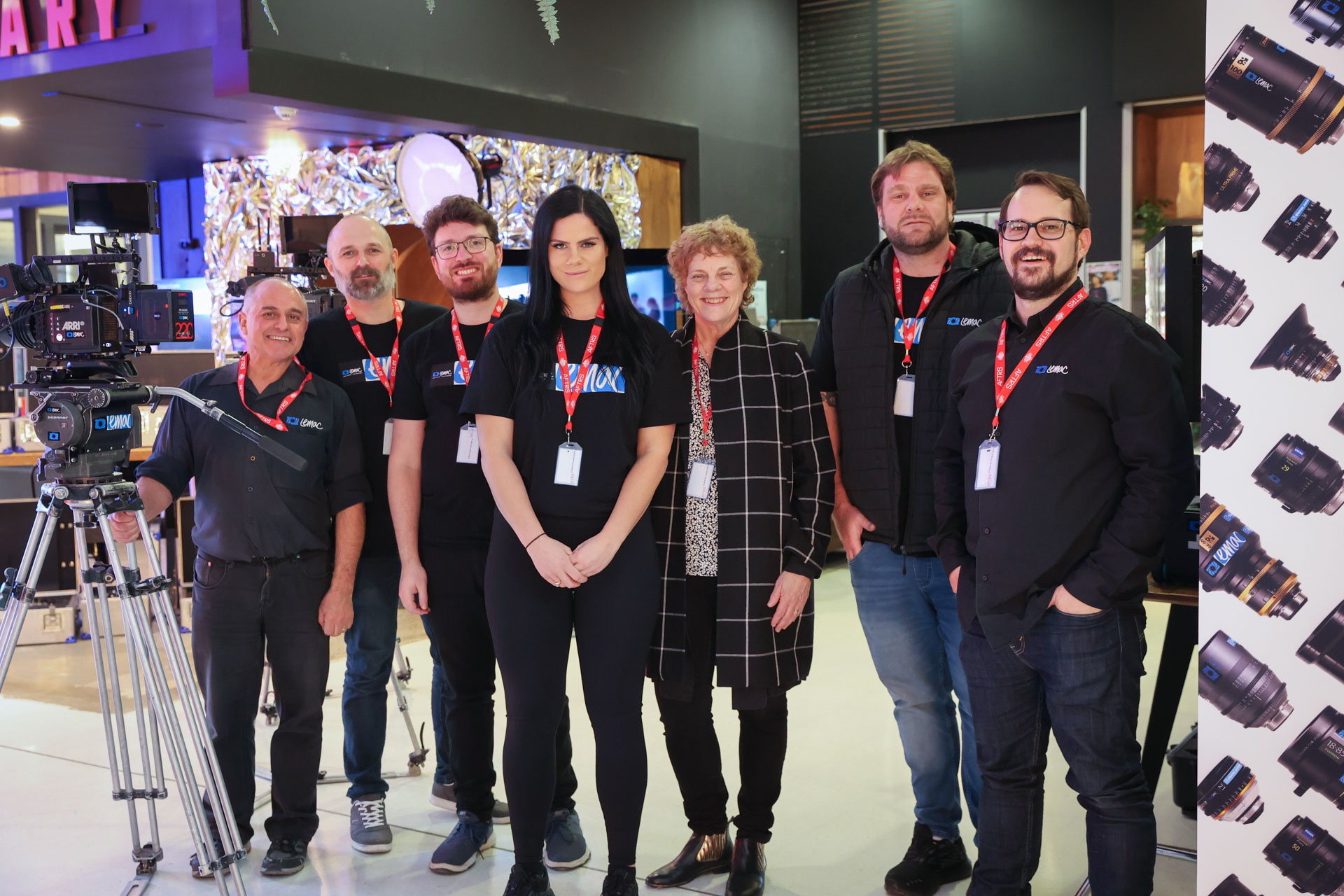
L-R Graham Jones, Paul Mackie, Rob Hillier, Kate Bowring, Sue, Dimitri Carmello & Tim Jordin hosting the ‘A Lens For Every Story’ ACS Evening at AFTRS in 2023
Lemac is about the people
All companies have highs and lows and in 2011 Lemac lost its founder John Bowring ACS. Many at the time, might have called it a day. Lemac came together, giving Sue great encouragement to take the company forward and show the world that we were more than one man. Sue and John’s daughter, Kate, also joined the team in 2015 to add her support. We and all those that he had championed are his legacy.
Over the years there have also been many of the team that have moved onto very successful careers in the industry. Many joined the camera department including some who have gone onto to become very successful DP’s, others in sound department, others as producers and some in technical sales roles. Their careers are wide, successful and diverse. We are very proud of what the extended family has achieved, even if we only played a very small part in their careers.
Lemac would of course not be here without the support of the industry and the very special and dedicated people that work in it. Thank you to those we have worked with over our 50-year journey.
With a vast bank of knowledge, it’s a regular occurrence for the team to get calls asking how to achieve a look, or how best to meet a required spec. Likewise many institutions across the country rely on the specialist knowledge that the sales team bring. Lemac is a very skilled crew. We have years of learning under our belt with many of the team having given the company decades of service. We love working with you.
Projects
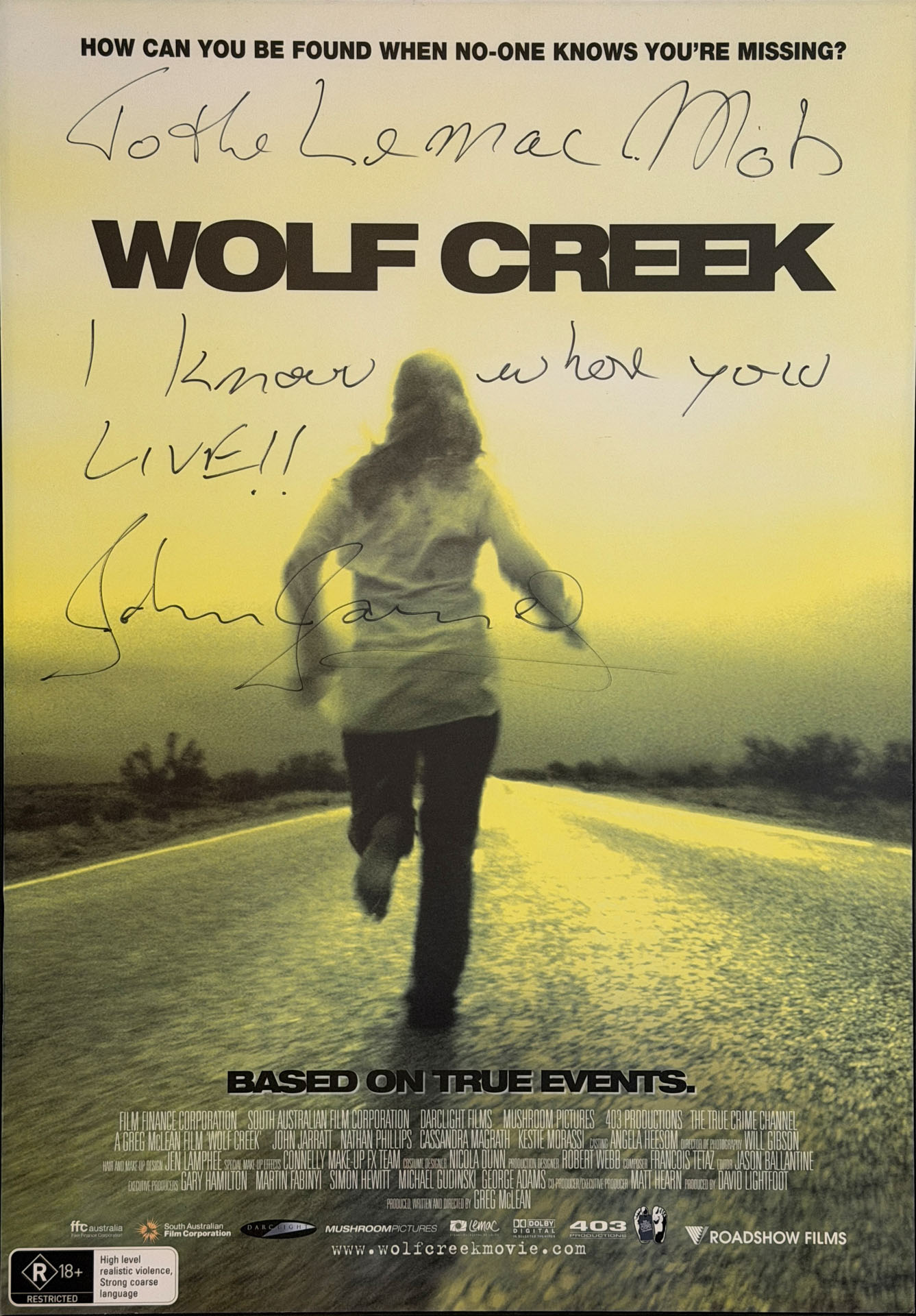
‘Wolf Creek’ poster with message from actor John Jarratt
We have been privileged to be able to supply and support some of the of the great Australian cinema success stories with Romper Stomper (the late Ron Hagen ACS), Muriel’s Wedding (Martin McGrath ACS), Wolf Creek (the late Will Gibson ACS), Red Dog (Geoffrey Hall ACS).
TV Drama Series have also played a big part in Lemac’s history. Some of the Australian series supported include H20: Just Add Water (Bruce Phillips ACS & Zenon “Butch” Sawko), Dance Academy (Martin McGrath ACS), Offspring (John Brawley ACS), The Bureau of Magical Things (Andrew Conder ACS SOC), Rosehaven (Eric Murray Lui ACS & Simon Riera NZCS), Harrow (Simon Chapman ACS, Bob Humphreys ACS, Mark Wareham ACS & John Stokes ACS), The Twelve (Martin McGrath ACS, Marden Dean ACS, Ed Goldner ACS), Invisible Boys (Jason Hargreaves ACS) and Black Snow (Eric Murray Lui ACS, Katie Milwright ACS & Mark Wareham ACS).
As with imaging technology, the means of distribution have also seen momentous change over the 50 years. The rise of the internet and of the streamers bring both challenges and opportunities.
Some of the more recent projects supported by Lemac include: Monarch: Legacy of Monsters for Legendary Television & Apple TV+ (Ben Nott ACS & David Burr ACS), Apple Cider Vinegar for Netflix (Toby Oliver ACS), Apples Never Fall for NBC Universal (Bob Humphreys ACS), Eden with Imagine Entertainment (Mathias Herndl AAC), The Bluff for Amazon (Greg Baldi), SPIT with Freshwater Pictures (Gary Phillips ACS), Ricky Stanicky for Amazon Prime (John Brawley ACS), Dangerous Animals (Shelley Farthing- Dawe ACS), War Machine for Lionsgate & Netflix (Aaron Morton NZCS) and FING! for Stan (Mark Wareham ACS).
Each project is unique in their approach, scale, and ambition however all have been proudly supported by our rental team.
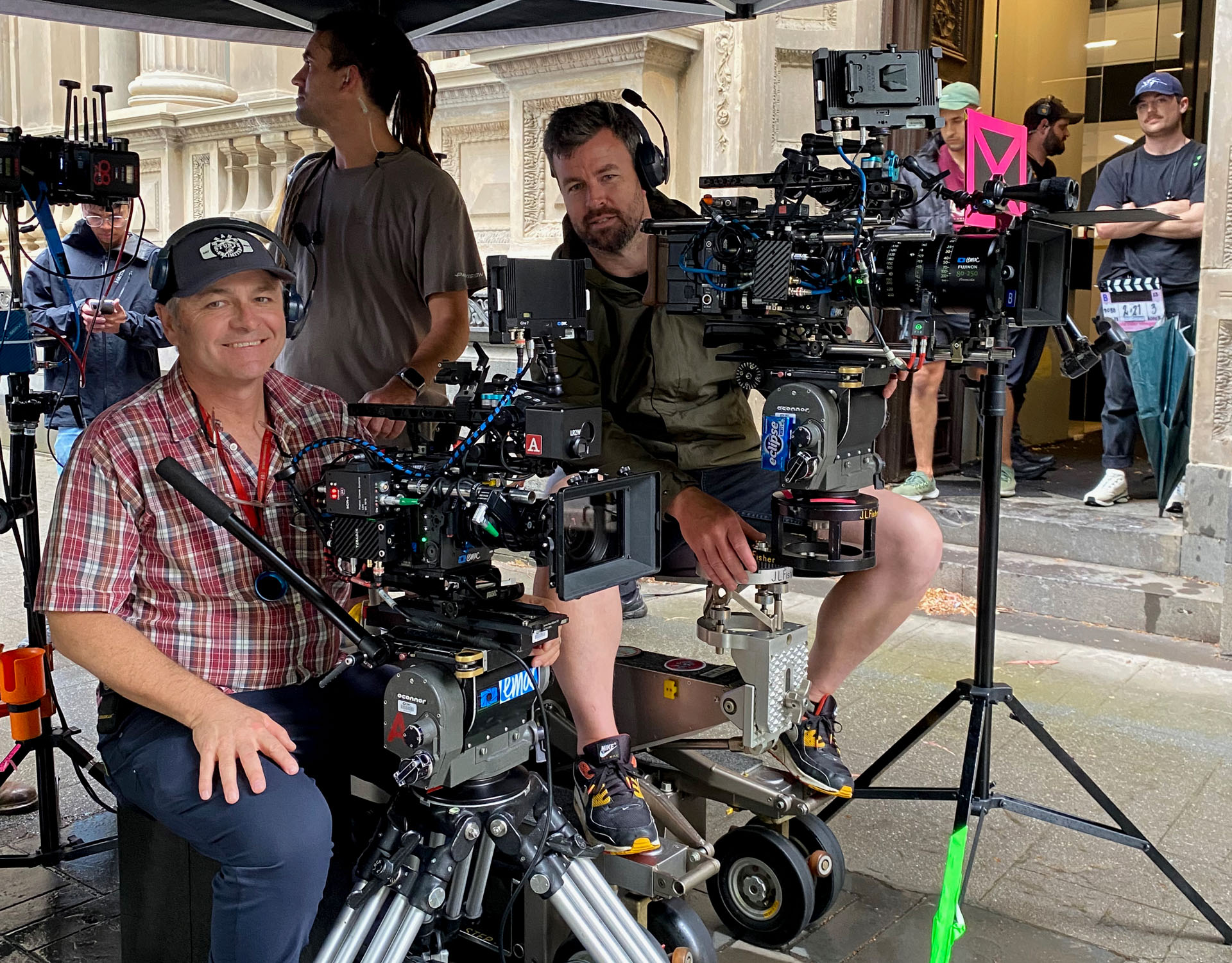
Toby Oliver ACS and Matt Dobson SOC on the set of Apple Cider Vinegar for Netflix
The future
It’s challenging, but we have always been up for a challenge.
In this first 50 years of the company, technology has moved faster in the last decade than the previous forty. In an industry where everything is rapidly changing Lemac is ready to not just respond, but to embrace the opportunities this brings.
Lemac - looking forward and always with passion.
Written by Sue Greenshields
Published in AC Mag - ISSUE #107 | DECEMBER 2025